



The Bold Beggar
Story of Bold Beggar
This story is based on Chandogya Upanishad
There were two Rishi -...
According to Vedanta, what causes a person to wake up from Sushupti state?
Do we have to see different states ? Do they occur in a sequence first Jagrat, than Swapan and than Sushupti...
Advaita Guru Parampara
Advaita Guru Parampara
The Advaita Guru-Parampara is the list of divine, Vedic and historical teachers of Advaita Vedanta.
What is the meaning of Brihadaranyaka Shruti “न हि द्रष्टुर्दृष्टेर्विपरिलोपो विद्यते”?
Seer's sight never cease
The Shruti statement is mentioned in Brihadaranyaka Upanishad 4.3.23

What is the philosophy of the Upanishads?
Philosophy of the Upanishads
Upanishads are created to give the self knowledge ( Atman-Gyana), therefore Upanishads are main texts...
Why is it so hard to see or experience the Atman (आत्मा)?
What is Atman ?
In the Brihadaranyaka Upanishad verse 3.7.23, it is mentioned
नान्योऽतोऽस्ति द्रष्टा, नान्योऽतोऽस्ति...
Vedanta Shruti – Reference
Vedanta Shruti
Shruti (श्रुति) in Hinduism refers to "that which is heard" — the...
Can the soul experience vision, sound, touch without a body?
Can soul experience vision, sound, touch without a body?
No, this not possible because what is called as experience...
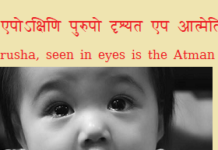
Story of Indra and Virochana getting the Self Knowledge
Indra and Virochana desire for Self Knowledge
Once Prajapati in the meeting with both devata and asuras announced -
If we really have never-dying consciousness, then what exactly am I doing while I...
Does my consciousness die, when I sleep ? No
When you are awake then you perceive this world by...