
Trimurti
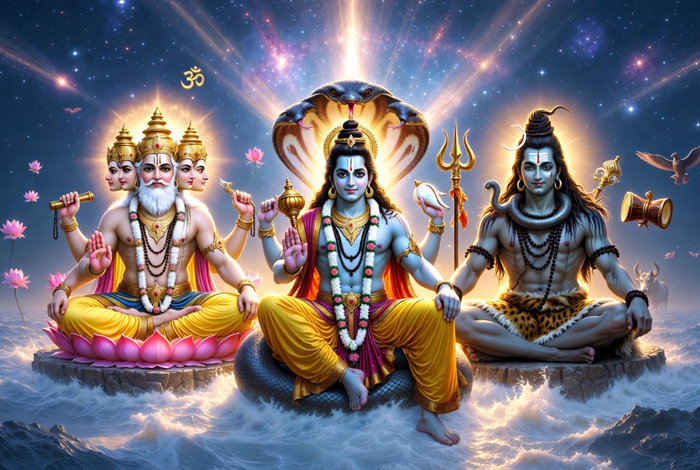
The Trimurti ( त्रिमूर्ति ) meaning “three forms” is the Hindu Trinity — a concept representing the three fundamental cosmic functions of the universe through three deities: Brahma (the Creator), Vishnu (the Preserver), and Shiva (the Destroyer).
They are not three separate independent gods but different aspects or manifestations of the one ultimate reality (Brahman) in Hinduism. These three illustrates the cyclical nature of existence: creation, sustenance, and dissolution.
1. Brahma — The Creator
Brahma — The Creator is one of the principal deities in Hinduism and the first member of the Trimurti. He represents the cosmic force of creation. Lord Brahma is typically shown with four heads and four arms. The four heads symbolize the four Vedas (Rigveda, Yajurveda, Samaveda, Atharvaveda) or the four directions of space. He is seated on a lotus flower that emerges from the navel of Vishnu.
2. Vishnu — The Preserver
Vishnu — The Preserver is the second deity of the Trimurti. He represents the cosmic force that maintains, sustains, and protects the universe, dharma, and cosmic order. Vishnu is usually depicted with blue skin and four arms. He often reclines on the serpent Shesha (Ananta) floating on the cosmic ocean (Kshirasagara), with Goddess Lakshmi by his side.
3. Shiva — The Destroyer/Transformer
Shiva — The Destroyer/Transformer is the third deity of the Trimurti. He represents the cosmic force of destruction, dissolution, and transformation. Shiva is often shown with blue or ash-smeared skin, matted hair , with the crescent moon, a third eye (symbolizing wisdom and destruction when opened), and a snake (Vasuki) coiled around his neck. He is usually depicted as an ascetic yogi meditating in the Himalayas or as the fierce Nataraja .