

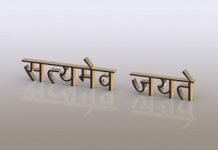
What is the meaning and source of Satyameva Jayate ?
Satyameva Jayate (सत्यमेव जयते)
Satyameva Jayate means "Truth alone triumphs", it is a part of a mantra...
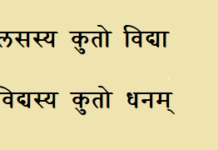
What is the meaning of “Alasasya Kuto Vidya” shloka ?
Alasasya Kuto Vidya (अलसस्य कुतो विद्या)
Sanskrit Shloka
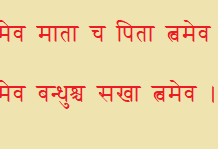
What is meaning and source of “twameva mata cha pita twameva”?
twameva mata cha pita twameva (त्वमेव माता च पिता त्वमेव)
Twameva Mata Cha Pita Twameva...
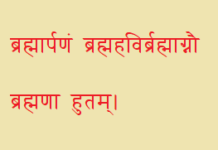
Brahmarpanam – Mantra recited before eating food
Brahmarpanam - Mantra recited before eating food
Brahmarpanam mantra is mentioned in Bhagavata Gita Chapter 4 verse 24

What is the meaning of “उद्धरेदात्मनात्मानम्”?
उद्धरेदात्मनात्मानम् means that one should raise his self (Atman) with the help of mind, which is unattached to sense-objects.
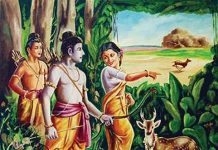
Hitopadesha
असंभवं हेममृगस्य जन्म, तथापि रामो लुलुभे मृगाय ।
प्रायः समापन्नविपत्तीकाले , धियो अपि पुंसां मलिना भवन्ति ।।
A golden deer can never exist, but still lord...
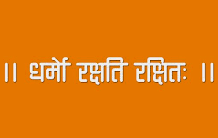
What is meaning and source of “Dharmo Rakshati Rakshitah” ?
Dharmo Rakshati Rakshita
Dharmo Rakshati Rakshita (धर्मो रक्षति रक्षितः) is a Sanskrit phrase mentioned in Mahabharata and Manusmriti
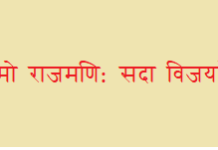
Ramo Rajamani Sada Vijayate – Sanskrit with meaning
Ramo Rajamani Sada Vijayate
"Ramo Rajamani Sada Vijayate" (रामो राजमणि: सदा विजयते) mantra is taken from Shri Rama Raksha...
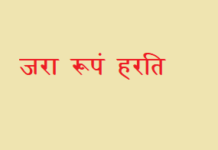
What is the source and meaning of “जरा रूपं हरति” ?
जरा रूपं हरति
This verse is a part of Vidura Niti and is mentioned...
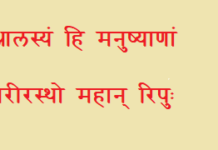
What is meaning of “आलस्यं हि मनुष्याणां शरीरस्थो महान् रिपुः” Shloka ?
"Alasyam hi manushyanam sharirastho mahan ripuh" is a famous Sanskrit shloka highlighting that laziness is the greatest enemy residing within a human's...