Home Blog

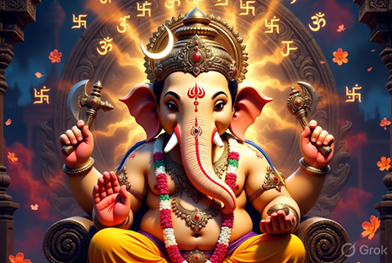
Shri Ganesha Pancharatnam

0
Ganesha

Shri Ganesha Pancharatnam ( श्री गणेश पञ्चरत्नम् )

Shri Ganesha Pancharatnam (also known as Maha Ganesha Pancharatnam) is a beautiful five-verse devotional hymn composed by Adi Shankaracharya in praise of Lord Ganesha.

“Pancharatnam” means “Five Jewels,” referring to the five precious verses.

It is one of the most popular and powerful stotras for removing obstacles, gaining wisdom, success, and spiritual progress. It is often chanted in the morning or before starting any important work.

Shri Ganesha Pancharatnam – Sanskrit Text with Meaning

मुदाकरात्तमोदकं सदा विमुक्तिसाधकं कलाधरावतंसकं विलासिलोकरक्षकम् । अनायकैकनायकं विनाशितेभदैत्यकं नताशुभाशुनाशकं नमामि तं विनायकम् ॥ १॥

Meaning: I salute Lord Vināyaka who holds the divine modaka (sweet) in His hand with joy, who is the eternal bestower of liberation, who wears the crescent moon as an ornament, who joyfully protects the world, who is the sole leader without any leader above Him, who destroys the demon-elephant (inner obstacles/demons), and who swiftly removes inauspiciousness for those who bow to Him.

नतेतरातिभीकरं नवोदितार्कभास्वरं नमत्सुरारिनिर्जरं नताधिकापदुद्धरम् । सुरेश्वरं निधीश्वरं गजेश्वरं गणेश्वरं महेश्वरं तमाश्रये परात्परं निरन्तरम् ॥ २॥

Meaning: To the arrogant who do not bow, He appears terrifying; to devotees, He shines like the newly risen sun. He is eternally fresh (without decay), worshipped by the gods, and lifts those who surrender from great calamities. I take continuous refuge in Him — the Lord of gods, Lord of wealth, Lord of elephants (Gajeshvara), Lord of the Gaṇas, the Great Maheśvara — who is supreme beyond the supreme.

समस्तलोकशङ्करं निरस्तदैत्यकुञ्जरं दरेतरोदरं वरं वरेभवक्त्रमक्षरम् । कृपाकरं क्षमाकरं मुदाकरं यशस्करं मनस्करं नमस्कृतां नमस्करोमि भास्वरम् ॥ ३॥

Meaning: He brings auspiciousness to the entire universe and removes mighty demonic forces (inner obstacles). His vast belly signifies generosity and boons; His excellent elephant face is imperishable. He grants grace, forgiveness, joy, fame, and intelligence to those who salute Him. I bow to His radiant form.

अकिञ्चनार्तिमार्जनं चिरन्तनोक्तिभाजनं पुरारिपूर्वनन्दनं सुरारिगर्वचर्वणम् । प्रपञ्चनाशभीषणं धनञ्जयादिभूषणम् कपोलदानवारणं भजे पुराणवारणम् ॥ ४॥

Meaning: He wipes away the sufferings of the destitute, and is the receptacle of ancient praises. He is the elder son of Lord Shiva (destroyer of Tripura) and crushes the pride of the enemies of the gods. He wields terrifying power to destroy worldly delusion and is adorned with powers like fire. From His cheeks flows the stream of grace. I worship this ancient elephant (Ganesha) whose glory flows like nectar in the Purāṇas.

नितान्तकान्तिदन्तकान्तिमन्तकान्तकात्मजं अचिन्त्यरूपमन्तहीनमन्तरायकृन्तनम् । हृदन्तरे निरन्तरं वसन्तमेव योगिनां तमेकदन्तमेव तं विचिन्तयामि सन्ततम् ॥ ५॥

Meaning: I constantly meditate upon the single-tusked Lord (Ekadanta), whose beautiful tusk radiates charm. He is the son of the One who destroyed death (Shiva). His form is inconceivable, limitless, and cuts through all obstacles. He eternally resides in the hearts of yogis.

फलश्रुति (Phalaśruti – Benefits)

महागणेशपञ्चरत्नमादरेण योऽन्वहं प्रजल्पति प्रभातके हृदि स्मरन् गणेश्वरम् । अरोगतामदोषतां सुसाहितीं सुपुत्रतां समाहितायुरष्टभूतिमभ्युपैति सोऽचिरात् ॥

Meaning: Whoever recites this great Ganesha Pancharatnam with devotion every morning, remembering Lord Ganesha in the heart, will soon attain good health, freedom from vices, good spouse and children, long life, and the eightfold powers (aṣṭa siddhis).

This beautiful stotra is ideal for daily morning recitation. It removes obstacles, grants wisdom, prosperity, and spiritual progress.

Shri Dakshinamurthy Stotram

0
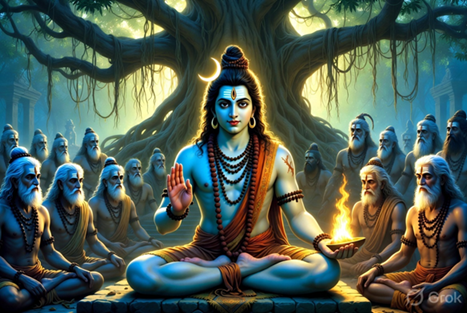
Sri Dakshinamurthy.

Shri Dakshinamurthy Stotram ( श्री दक्षिणामूर्ति स्तोत्रम् )

Shri Dakshinamurthy Stotram (श्री दक्षिणामूर्ति स्तोत्रम्) is a profound hymn composed by Adi Shankaracharya. It praises Lord Dakshinamurthy (a form of Shiva as the supreme Guru and embodiment of knowledge) and expounds key principles of Advaita Vedanta, such as the nature of the Self (Atman), the illusory world (Maya), and ultimate realization.

Dhyanam (Meditative Verses)

मौनव्याख्या प्रकटित परब्रह्मतत्त्वं युवानं वर्षिष्ठांते वसद् ऋषिगणैः आवृतं ब्रह्मनिष्ठैः । आचार्येन्द्रं करकलित चिन्मुद्रमानंदमूर्तिं स्वात्मारामं मुदितवदनं दक्षिणामूर्तिमीडे ॥

I salute Lord Dakshinamurthy, who reveals the truth of the Supreme Brahman through silence, who appears young while surrounded by elderly sages established in Brahman, the supreme teacher holding the Chinmudra, the embodiment of bliss, who rejoices in the Self with a joyful face.

वटविटपिसमीपेभूमिभागे निषण्णं सकलमुनिजनानां ज्ञानदातारमारात् । त्रिभुवनगुरुमीशं दक्षिणामूर्तिदेवं जननमरणदुःखच्छेद दक्षं नमामि ॥

Seated under the banyan tree on the ground, bestowing knowledge to all sages nearby, the Guru of the three worlds, Lord Dakshinamurthy, skilled in cutting the sorrow of birth and death—I bow to Him.

Main Stotram

विश्वं दर्पणदृश्यमाननगरीतुल्यं निजान्तर्गतं पश्यन्नात्मनि मायया बहिरिवोद्भूतं यथा निद्रया । यः साक्षात्कुरुते प्रबोधसमये स्वात्मानमेवाद्वयं तस्मै श्रीगुरुमूर्तये नम इदं श्रीदक्षिणामूर्तये ॥१॥

To Him who sees the entire universe (like a city reflected in a mirror) existing within Himself, yet appearing as if outside due to Maya (like a dream), and who, upon awakening, directly realizes the non-dual Self — salutations to that Guru-form, Sri Dakshinamurthy.

बीजस्यान्तरिवाङ्कुरो जगदिदं प्राङ्निर्विकल्पं पुनः मायाकल्पितदेशकालकलना वैचित्र्यचित्रीकृतम् । मायावीव विजृम्भयत्यपि महायोगीव यः स्वेच्छया तस्मै श्रीगुरुमूर्तये नम इदं श्रीदक्षिणामूर्तये ॥२॥

Like a sprout inside a seed, this world was undifferentiated earlier; now projected by Maya with divisions of space and time in diverse forms. Like a magician or great yogi, He manifests it at will — salutations to Sri Dakshinamurthy.

यस्यैव स्फुरणं सदात्मकमसत्कल्पार्थकं भासते साक्षात्तत्त्वमसीति वेदवचसा यो बोधयत्याश्रितान् । यत्साक्षात्करणाद्भवेन्न पुनरावृत्तिर्भवाम्भोनिधौ तस्मै श्रीगुरुमूर्तये नम इदं श्रीदक्षिणामूर्तये ॥३॥

By whose light the unreal appears real, who teaches the mahavakya “Tat Tvam Asi” (Thou Art That) to devotees, and by whose realization there is no more return to the ocean of samsara — salutations to Him.

नानाछिद्र घटोदरस्थित महादीप प्रभाभास्वरं ज्ञानं यस्य तु चक्षुरादिकरण द्वारा बहिः स्पन्दते । जानामीति तमेव भान्तमनुभात्येतत्समस्तं जगत् तस्मै श्रीगुरुमूर्तये नम इदं श्रीदक्षिणामूर्तये ॥४॥

Like the light of a great lamp inside a pot with many holes shining outward through the senses, whose knowledge makes the whole world shine as “I know” — salutations to Sri Dakshinamurthy.

देहं प्राणमपीन्द्रियाण्यपि चलां बुद्धिं च शून्यं विदुः स्त्री बालान्ध जडोपमास्त्वहमिति भ्रान्ता भृशं वादिनः । मायाशक्ति विलास कल्पित महाव्यामोह संहारिणे तस्मै श्रीगुरुमूर्तये नम इदं श्रीदक्षिणामूर्तये ॥५॥

Those who identify the Self with body, prana, senses, intellect or void are deluded like women, children, blind or fools. To the destroyer of this great delusion created by Maya’s play — salutations.

राहुग्रस्त दिवाकरेंदु सदृशो माया समाच्छादनात् सन्मात्रः करणोप संहरणतो योऽभूत्सुषुप्तः पुमान् । प्रागस्वाप्समिति प्रबोधसमये यः प्रत्यभिज्ञायते तस्मै श्रीगुरुमूर्तये नम इदं श्रीदक्षिणामूर्तये ॥६॥

Like the sun or moon covered by Rahu, the pure consciousness veiled by Maya in deep sleep, who upon waking recognizes “I slept” — salutations to Him.

बाल्यादिष्वपि जागरादिषु तथा सर्वास्ववस्थास्वपि व्यावृत्तास्वनुवर्तमान महमित्यन्तः स्फुरन्तं सदा । स्वात्मानं प्रकटीकरोति भजतां यो मुद्रया भद्रया तस्मै श्रीगुरुमूर्तये नम इदं श्रीदक्षिणामूर्तये ॥७॥

Who, through the auspicious Chinmudra, reveals the eternal inner Self (“I”) that persists unchanged through childhood, youth, old age, waking, dream, and sleep — salutations.

विश्वं पश्यति कार्यकारणतया स्वस्वामिसंबन्धतः शिष्याचार्यतया तथैव पितृपुत्राद्यात्मना भेदतः । स्वप्ने जाग्रति वा य एष पुरुषो माया परिभ्रामितः तस्मै श्रीगुरुमूर्तये नम इदं श्रीदक्षिणामूर्तये ॥८॥

Who sees the world in terms of cause-effect, owner-owned, teacher-disciple, father-son, etc., due to Maya’s delusion in dream or waking — salutations.

भूरम्बांस्यनिलोऽम्बर महर्नाथो हिमांशुः पुमान् इत्याभाति चराचरात्मकमिदं यस्यैव मूर्त्यष्टकम् । नान्यत्किञ्चन विद्यते विमृशतां यस्मात्परस्माद्विभो तस्मै श्रीगुरुमूर्तये नम इदं श्रीदक्षिणामूर्तये ॥९॥

This movable-immovable universe appears as earth, water, fire, air, space, sun, moon, and soul — the eightfold form of the Supreme. Nothing else exists apart from Him — salutations.

सर्वात्मत्वमिति स्फुटीकृतमिदं यस्मादमुष्मिन् स्तवे तेनास्य श्रवणात्तदर्थमननाद्ध्यानाच्च संकीर्तनात् । सर्वात्मत्व महाविभूतिसहितं स्यादीश्वरत्वं स्वतः सिद्ध्येत्तत्पुनरष्टधा परिणतं चैश्वर्यमव्याहतम् ॥१०॥

By listening to, reflecting on, meditating upon, and singing this hymn that clearly reveals the All-Self, one attains lordship with the great glory of realizing everything as the Self, and the unobstructed eightfold powers.

Concluding Verses

निधये सर्वविद्यानां भिषजे भवरोगिणाम् । गुरवे सर्वलोकानां दक्षिणामूर्तये नमः ॥

Salutations to the treasure of all knowledge, the physician for the disease of samsara, the Guru of all worlds — Sri Dakshinamurthy.

ॐ शान्तिः शान्तिः शान्तिः ॥

Significance of Sri Dakshinamurthy

Chanting this stotram with understanding is believed to bestow wisdom, destroy ignorance, and lead toward self-realization. It is especially powerful on Guru-related days or during meditation.


All accumulations will end

0
सर्वे क्षयान्ता निचयाः पतनान्ताः समुच्छ्रयाः !

Sanskrit Shloka

सर्वे क्षयान्ता निचयाः पतनान्ताः समुच्छ्रयाः !
संयॊगा विप्रयॊगान्ता मरणान्तं हि जीवितम् !! – Mahabharata, Shanti Parva, 26.30

English Meaning

All accumulations will end in destruction, all rising will end in downfall, all relations will end in separation and all forms of life will end in death.

Hindi Meaning

सभी संचय (इकट्ठा की गई वस्तुएं ) अंत में क्षय हो जाते हैं।  उन्नति का अंत पतन है। मिलन का अंत वियोग है और जीवन का अंत निश्चित रूप से मृत्यु है !

What is meaning of “Atmanah pratikulani paresham na samacharet” Shloka ?

0
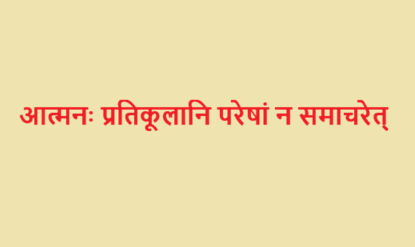
आत्मनः प्रतिकूलानि परेषां न समाचरेत्

Atmanah pratikulani paresham na samacharet

“Atmanah pratikulani paresham na samacharet” means that whatever behavior or conduct you dislike for yourself, do not do it to others.

It is mentioned in Panchatantra , Kakolukiyam(book 3) verse 102

The Panchatantra is an ancient Indian collection of interrelated animal fables in Sanskrit verse and prose, written by Pandit Vishnu Sharma to teach “Nitisastra” to princes. It consists of five books (tantras) covering strategies of politics and human psychology through engaging stories, often highlighting morality, intellect, and practical wisdom.

Sanskrit Shloka

श्रूयतां धर्मसर्वस्वं श्रुत्वा चैवावधार्यताम् ।
आत्मनः प्रतिकूलानि परेषां न समाचरेत् ।।

English Meaning

Listen to the essence of Dharma and embrace it. Do not behave towards others in a way that you find unpleasant (painful) to yourself.

Hindi Meaning

हे मनुष्यों! तुम लोग धर्म का सार सुनो और सुनकर धारण करो, जो हम अपने लिये नहीं चाहते, उसको दूसरों के प्रति न करें ।

Danam bhogo nasha tisro ( दानं भोगो नाशस्तिस्रो )

0
दानं भोगो नाशस्तिस्रो गतयः भवन्ति वित्तस्य।

“Danam bhogo nasha tisro gatayo bhavanti vitasya” is the famous Sanskrit which means “Virtues (qualities) remain virtues only when they are with someone who appreciates them”. 

It is mentioned in Niti Shatakam which is a renowned Sanskrit text composed by the ancient Indian poet and philosopher Bhartrihari. Niti Shatakam is a collection of around 100 verses that focus on morals, ethics, and practical wisdom for living a noble and successful life. 

Sanskrit Shloka

दानं भोगो नाशस्तिस्रो गतयः भवन्ति वित्तस्य।
यो न ददाति न भुङ्क्ते तस्य तृतीया गतिर्भवति।। – Niti shakatam verse 43

English Meaning

The person who neither donates his wealth nor consumes it himself , than the wealth has third fate of its destruction.

Hindi Meaning

जो व्यक्ति अपने धन का न तो दान करता है और न ही उसका स्वयं उपभोग करता है , वह धन तीसरी गति को प्राप्त करता है यानी उसका नाश होता है। 

Guna Gunagyeshu ( गुणा गुणज्ञेषु गुणा भवन्ति )

0
Guna Gunagyeshu ( गुणा गुणज्ञेषु गुणा भवन्ति )

“Guna Gunagyeshu” is the famous Sanskrit which means “Virtues (or qualities) remain virtues only when they are with someone who appreciates them (knows their value)”. 

Sanskrit Shloka

गुणा गुणज्ञेषु गुणा भवन्ति ते निर्गुणं प्राप्य भवन्ति दोषाः ।
सुस्वादुतोयाः प्रभवन्ति नद्यः समुद्रमासाद्य भवन्त्यपेयाः ॥

English Meaning

Good qualities shine among good people but become faults with bad people. Rivers when they are born they are sweet but they become undrinkable in the ocean.

Hindi Meaning

गुणी लोगों के बीच रहकर ही गुण बने रहते हैं, लेकिन निर्गुण व्यक्ति को प्राप्त होकर वे दोष बन जाते हैं, जैसे नदियाँ पर्वतों से स्वादिष्ट जल लेकर निकलती हैं, लेकिन समुद्र में मिलकर वही पानी खारा हो जाता है।

What is Ekadashi and why people does this fast?

0
What is Ekadashi and why people does this fast?

Story of Ekadashi

The Story of Ekadashi Fast (Ekadashi Vrat Katha) comes primarily from the Padma Purana. It explains the divine origin of Goddess Ekadashi and why fasting on the 11th lunar day pleases Lord Vishnu and grants spiritual liberation

The Legend of Demon Mura (or Murdanav)

In Satya Yuga, a powerful demon named Mura (or Murdanav) terrorized the universe. He defeated the Devatas (gods), disrupted yajnas and penances and spread fear among devotees and righteous beings. Helpless the Devatas approached Lord Vishnu, the preserver for protection.

Lord Vishnu fought a fierce battle with Mura for thousands of years. Exhausted from the prolonged combat, Vishnu withdrew to a cave in the Himalayas to rejuvenate. The cunning demon followed him, intending to attack while the Lord was asleep or resting.

Birth of Goddess Ekadashi

As Mura approached the sleeping Vishnu with evil intent, a divine feminine energy suddenly emerged from Lord Vishnu’s body — specifically from his 11th sense (mind). This beautiful goddess form was full of power and devotion.

Mura, infatuated by her beauty, proposed marriage. The goddess cleverly replied that she would marry him only if he could defeat her in battle. A fierce duel ensued, and the goddess ultimately slayed the demon Mura, protecting Vishnu and the universe from evil.

Vishnu’s Blessing and the Origin of the Fast

When Lord Vishnu awoke and saw the scene, he was immensely pleased with the goddess. He named her Ekadashi (because she manifested from his eleven senses / on the eleventh day). Vishnu granted her a boon.

Whoever observes a fast on Ekadashi day, controls their eleven senses (mind + senses), and offers devotion to Vishnu will be freed from all sins, impurities, and the cycle of birth and death (Moksha).
Vishnu declared that Ekadashi is dear to him and fasting on this day is equivalent to pleasing him directly. Those who fast will attain his eternal abode (Vaikuntha).

Goddess Ekadashi herself requested that people abstain from grains on her day and focus on spiritual practices. Lord Vishnu agreed, and thus the tradition of Ekadashi Vrat began. This day is considered the personification of Vishnu’s own purifying power

Eight Siddhis (Ashta Siddhis) of Lord Hanuman

0
Eight Siddhis (Ashta Siddhis) of Lord Hanuman

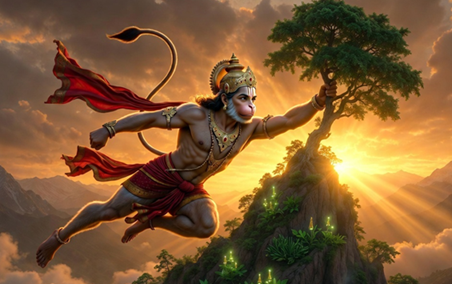
The Eight Siddhis (Ashta Siddhis) of Lord Hanuman are eight supernatural powers or divine perfections that Hanuman Ji is believed to possess fully, thanks to his unmatched devotion to Lord Rama.

These are referenced in the Hanuman Chalisa with the famous line: “Ashta Siddhi Nava Nidhi Ke Data, Asa Bar Dinha Janaki Mata (अष्ट सिद्धि नव निधि के दाता, अस बर दीन जानकी माता) — meaning Mother Sita blessed Hanuman with the ability to grant these eight siddhis and nine treasures to his devotees.

The 8 Siddhis and Their Meanings

Here is a clear list of the Ashta Siddhis:

  1. Anima (अणिमा) — The power to become as small as an atom or shrink one’s body to any minute size. Hanuman used this in Lanka to search for Sita discreetly without being noticed.
  2. Mahima (महिमा) — The power to become infinitely large or expand one’s body to gigantic proportions. Hanuman demonstrated this while leaping across the ocean and lifting mountains.
  3. Garima (गरिमा) — The power to become infinitely heavy or increase one’s weight immensely, making oneself immovable.
  4. Laghima (लघिमा) — The power to become weightless or extremely light, enabling levitation or effortless movement.
  5. Prapti (प्राप्ति) — The power to obtain anything desired or reach anywhere instantly (teleportation or acquiring objects at will).
  6. Prakamya (प्राकाम्य) — The power to fulfill any desire or live under any condition without obstruction; full control over one’s wishes.
  7. Ishitva / Isitva (ईशित्व) — Lordship or supremacy over nature and creation; the ability to command elements and beings.
  8. Vashitva / Vasitva (वशित्व) — The power to control the minds of others and subjugate all beings or forces.

Significance

These siddhis represent complete mastery over the body, mind, and universe. Hanuman, as a perfect yogi and devotee, attained them through devotion, brahmacharya and selfless service towards Lord Rama.

Devotees chant the Hanuman Chalisa believing that sincere worship of Hanuman Ji can help them receive blessings related to these powers (in a spiritual or metaphorical sense, such as inner strength, humility, and fearlessness).

Hanuman is also the bestower of Nava Nidhis (nine divine treasures), symbolizing material and spiritual prosperity.

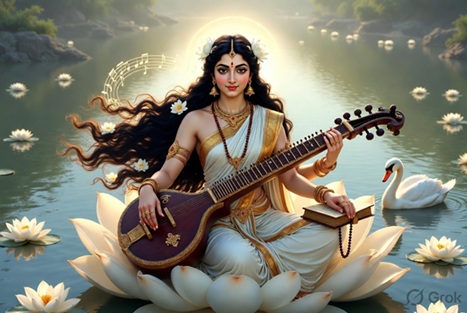
Saraswati Namastubhyam (सरस्वती नमस्तुभ्यम्)

0
Saraswati Namastubhyam (सरस्वती नमस्तुभ्यम्)

Saraswati Namastubhyam (सरस्वती नमस्तुभ्यम्) is one of the most popular and widely recited shlokas in Indian schools, homes, and before starting studies or any new learning.

Sanskrit Shloka

ॐ सरस्वती नमस्तुभ्यं वरदे कामरूपिणि ।
विद्यारम्भं करिष्यामि सिद्धिर्भवतु मे सदा ॥

English Meaning

O Goddess Saraswati, I bow down humbly before you, the bestower of all wishes; As I commence my studies, may there be success for ever.

Hindi Meaning

 “हे देवी सरस्वती, आपको प्रणाम। आप वरदान देने वाली और मनोकामना पूरी करने वाली हैं। जैसे ही मैं अपनी पढ़ाई शुरू करता हूँ, कृपया मुझे सदा सफलता प्रदान करें !

Purpose & Usage

Purpose: It is used to seek blessings for focus, intellect, and the successful completion of learning endeavors.

When to Chant: Traditionally recited before starting studies, exams, or during the morning to invoke wisdom.

What is Karma ?

0
what is karma

Karma (कर्म) is one of the core concepts in Hinduism (and also in Buddhism, Jainism, and Sikhism). It literally means “action” or “deed,” but it refers to the universal law of cause and effect that governs moral and spiritual consequences.

Simple Explanation

  • Every thought, word, and action you perform creates karma.
  • These actions produce results (fruits) that return to you — either in this lifetime or in future births.
  • Good actions (positive karma) lead to happiness, success, and better circumstances.
  • Bad actions (negative karma) lead to suffering, challenges, or setbacks.
  • It is a natural, impersonal law, like gravity. You reap what you sow.

Three Types of Karma:

  1. Sanchita Karma — Accumulated karma from all past lives.
  2. Prarabdha Karma — The portion you are experiencing right now in this life (what you “have to go through”)
  3. Kriyamana (or Agami) Karma — New karma you are creating in the present through your choices.

Karma operates across lifetimes because the soul (atman) is eternal and reincarnates (samsara) until it achieves moksha (liberation).

Important Clarifications

  • Free Will Exists — You cannot change past karma easily, but your current actions determine future karma. Devotion, selflessness, and wisdom can help neutralize or transcend negative effects.
  • Not Fatalistic — Hinduism encourages proactive living, ethics (dharma), and spiritual practices (yoga, meditation or puja) to improve one’s karma.
  • Beyond Reward/Punishment — Karma ultimately teaches lessons for soul evolution toward unity with the divine (Brahman).

Famous Analogy

Lord Krishna explains in the Bhagavad Gita (Chapter 4 & others) that one should perform duties selflessly without attachment to results — this is nishkama karma (action without desire for fruits), the path to freedom from karma’s bondage.

Most Viewed

Favorite

error: Veda Boys