
Sutra – माङि लुङ्
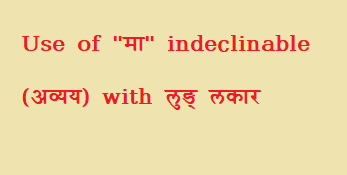
meaning – माङ्-अव्ययस्य उपस्थितौ धातोः लुङ्लकारः भवति (In presence of the अव्यय माङ्, लुङ्लकारः is used.)
लुङ् लकार – which is used for the Simple Past Tense ( सामान्य भूतकाल ) , in conjunction with “मा” indeclinable (अव्यय ) , only लुङ् लकार is used and it is used without its default “अट्” प्रत्यय therefore the form is मा कार्षी
Usage of these forms in Mahabharata –
मा तात साहसं कार्षिर्मम पूर्वपरिग्रहः। प्रश्नानुक्त्वा तु कौन्तेय ततः पिब हरस्व च। – Mahabharata – Van parva – chapter 313 verse 39
Yaksha to Yudhishthira – Don’t you dare, this water is under my control. You can drink and take water after you answer my questions.
स राजा तस्य ते पुत्राः पितुर्दायाद्यहारिणः ।
मा तात कलहं कार्षी राज्यस्यार्धं प्रदीयताम् – Mahabharata – Udyog parva – chapter 147 verse 40
Himself being a king these sons of his must get a share of their paternal wealth. Do not, my dear son, quarrel but give them their share of Kingdom.
Usage of these forms in Bhagavad Gita –
क्लैब्यं मा स्म गम: पार्थ नैतत्त्वय्युपपद्यते |
क्षुद्रं हृदयदौर्बल्यं त्यक्त्वोत्तिष्ठ परन्तप || Chapter 2 verse 3
O Parth, it does not befit you to yield to this unmanliness. Give up such petty weakness of heart and arise, O vanquisher of enemies.
कृञ् करणे (to do, to make) – लुङ्लकारः (परस्मैपदम्)

कृञ् करणे (to do, to make) – लुङ्लकारः (परस्मैपदम्) and लुङ्लकारः (आत्मनेपदम्)